


AMG33D
-
Posts
281 -
Joined
-
Last visited
Everything posted by AMG33D
-
sumptuous open-top Stuttgart (Germany). Being Mercedes-Benz's first open-top luxury four-seater since 1971, the new Cabriolet is the sixth iteration of the present S-Class family. It provides state-of-the-art technology found in the S-Class in addition to a unique, alluring, and special appearance, as well as a thorough idea for warmth and wind protection, including intelligent temperature management for convertibles. The September Frankfurt International Motor Show will be the site of the international debut of the stylishly athletic vehicle. A Mercedes-Benz spectacular dream automobile will also be on display in Frankfurt.S63 4MATIC Cabriolet, a vehicle manufactured by AMG. It can accelerate from 0 to 100 km/h in 3.9 seconds and has AMG Performance 4MATIC all-wheel drive with a rear-biased torque split as standard. The engine is a 5.5-liter V8 biturbo and produces 430 kW (585 hp) and 900 Nm of peak torque. "This new S-Class Cabriolet represents our passion for individual and timelessly exclusive mobility, which we share with our customers. It's a pleasure to be able to offer Mercedes aficionados an open-top car in the S-Class after 44 years," says Ola Källenius, Board Member of Daimler AG, Mercedes-Benz Cars Sales. Rigidity is a hallmark of the new S-Class Cabriolet. Thanks to innovative solutions like the magnesium and aluminium bulkhead in the baggage area and the aluminium rear floor, the bodyshell weight is reduced to the same level as the S-Class Coupé. In addition to a gas generator that moves the roll bars into place, the standard-fit roll-over protection system that is located behind the rear head restraints makes use of pyrotechnic activation of the actuators. "The S-Class family is now complete. We have never offered six models in the luxury class before - and we have never enjoyed such success," remarks Prof. Dr. Thomas Weber, Member of the Daimler Board of Management responsible for Group Research and Head of Mercedes-Benz Cars Development, two years after the launch. "The S-Class sets the pace on the global market when it comes to safety, efficiency and comfort." The most comfortable convertible in the world, according to Mercedes-Benz, is their own creation. The intelligent temperature control, heated armrests, upgraded automated wind protection system AIRCAP, neck-level heating system AIRSCARF, and rear seat heating all work together to make sure you're comfortable no matter the weather. The climate is entirely managed automatically, unlike traditional systems. This eliminates the requirement for the driver to save a temperature setting specific to closed or open top driving or to choose a mode for these modes. The idea of the baggage compartment demonstrates meticulous craftsmanship as well; the soft top folds down into a portion of the compartment when the top is opened. An electrically controlled retractable cover encloses the soft top, separating it from the remaining baggage compartment area. As soon as the soft top is opened, this baggage compartment wall expands automatically. The driver may now open and close the baggage compartment lid without stopping the vehicle, which is a huge time saver. If the baggage compartment is filled to the brim with stuff, the barrier will not activate. To make more room for your bags, you may shut the soft top and then push a button on the boot lid's inner panelling to retract the baggage compartment divider. Further conveniences include an internal through-loading capability and standard-specification electro-hydraulic remote locking for the baggage compartment. Adaptive profile, first-rate quality: the layout Speaking about the new S-Class Cabriolet, Daimler AG's Head of Design Gorden Wagener praised it as "one of the most beautiful and exclusive S-Class cars of all time" due to its sensuous and pure design style. "It embodies modern luxury in a very special way and is an expression of both effortless superiority and progressivity." Front and centre is the black diamond radiator grille with the Mercedes star and one silver louvre with chrome inlays; it's the showpiece of the front end. The two strong character lines on the bonnet give it a dynamic touch. The eye-catching front bumper has massive air intakes on both the centre and side panels. The chrome accents give the front end a sporty look. Exquisite Swarovski crystals adorn the daytime running lights and direction indications of the optional LED Intelligent Light System, showcasing the car's beauty in sparkling brilliance. With the soft top down, the S-Class Cabrio's side profile takes on an exhilarating, dynamic coupé appearance. The side design incorporates a low greenhouse, completely retractable side windows, and a lowering line of the side wall that descends towards the rear. When closed, the vehicle's multilayer tight soft top highlights its class. Black, dark blue, beige, and dark red are the colour options for the soft top. At speeds up to 60 km/h, the soft top may be opened and closed using the switch located on the central console. It takes around 20 seconds for the door to open and close. Above the baggage compartment's mechanically expanding divider, the soft top is placed. A tensioning-arm top is the latest soft top design from Mercedes-Benz. The necessary closing pressures for the soft top are produced by 'overcentering,' or repositioning the tensioning arms beyond their dead centre point. As a result, the S-Class Cabrio's high-quality design is maintained, and no extra closures are required on the soft top compartment lid. The electronic key also allows you to unlock and close the door from outside the car. The strong shoulders and flat LED tail lights at the back provide the appearance of breadth. Effortlessly blending into the back image is the closed soft top with glass window. A broad chrome trim feature frames the soft top compartment lid. A horizontal chrome trim piece, two exhaust trims that are visible, and a rear bumper that resembles a diffusor give the vehicle a dynamic appearance. On top of concealing the reverse camera and the optional 360-degree camera, the hinged Mercedes star doubles as a grip to lift the trunk lid by hand. Inside, the S-Class Cabriolet evokes an extraordinarily refined ambiance with its superb materials and opulently athletic design language. The open-air lounge, reminiscent of a boat, is created when the soft top is opened. The exclusivity of the vehicle is emphasised by the meticulously coordinated colour and material selection, as well as the top-notch controls made of true metal or chrome-look. Leather, nappa leather, or designo Exclusive nappa leather are available as personalisation options, along with six inside colour schemes, one of which is a maritime-inspired blend of porcelain and deep-sea blue. All of the materials are of the finest quality and have a distinct handmade feel. Typical low-wind audible Mercedes-Benz, reigning champions of aerodynamics, raises the bar with the S-Class Cabrio, which has a Cd value of 0.29. The extensive engine compartment and main floor panelling, the underbody panelling concept, the rear axle cladding, the aerodynamically optimised wheel spoilers, the aerodynamic shape of the exterior mirrors, and the well-balanced power split between the front and rear axles are all factors that contribute to the excellent air flow characteristics. The open four-seater provides outstanding noise-related comfort, making it a worthy sibling model to the S-Class Coupé, the most silent series production vehicle overall. As an ordinary feature, it has a three-layer acoustic soft top. Instead of the former neoprene layer, the outside fabric cover now has a butyl layer that acts as a water barrier on the inside. Along with the acoustically designed roof liner and improved upholstery matting, this reduces noise levels. Additionally, the insulating layer prevents bows that are visible from the outside from detracting from the graceful profile shape. A low level of wind noise inside is achieved in large part by the bodyshell measures, the sealing design for the doors, and the double glazing. The aerodynamics team has paid close attention to ensuring a draught-free cabin in addition to ensuring comfort in relation to noise. The AIRCAP autonomous wind protection system is an accessible optional feature on the new S-Class Cabrio. To lessen internal turbulence, this may be expanded with the push of a button. One part of AIRCAP is an extensible net wind deflector that snaps into the roof frame; the other part is a draught-stop that snaps into place behind the back seats; both parts have a convex shape and stainless steel trim. A new improvement is the inventive diffusor ribs that run down the base of the front louvre. They lower the decibel level by creating targeted turbulence effects. The S-Class Cabrio's wind deflector is finished in the same hue as the body. The AIRSCARF neck-level heating is another possible function that may be customised. By making it possible to drive comfortably with the top down even when the temperature outside is low, this allows the convertible season to last longer. Using the head restraints as a conduit, this innovative neck-level heating system warms the air that flows around the neck and head of the passengers. THERMOTRONIC: very advanced temperature regulation A future generation of open-top Mercedes-Benz cars will include an advanced temperature management system that is both very user-friendly and well suited to the weather. This technology makes its debut in the new S-Class. Those Mercedes a/c specialists?For this system, Benz created a brand-new software architecture and put it through its paces on cutting-edge "hardware-in-the-loop" test stands before honing it in the climatic chamber and during test drives. The climate is entirely managed automatically, unlike traditional systems. This eliminates the requirement for the driver to save a temperature setting specific to closed or open top driving or to choose a mode for these modes. For optimal thermal comfort, an overlapping function accomplishes the remarkable feat of seamlessly switching between closed and open top (and back again). Here, the Cabrio reaps the benefits of the S-Class's premium climate control system, which allows for things like automated individual adjustment of each nozzle. Many different parts of the car may exchange data with the AC control unit since it is completely networked. An perfect environment may be achieved in every situation thanks to the 12 sensors and 18 actuators. The sensors can measure not only the temperature inside and outside, but also the amount of sun radiation. As fresh air is pulled in, a sensor that detects air pollution and hazardous substances keeps a close eye on it. A dewpoint sensor detects the relative humidity of the front windscreen in order to successfully avoid foggy windows. The dashboard and the back shelf each include solar sensors, so when the sun's rays change, the blower volume and temperature are quickly adjusted to your preferences. The standard-fit THERMOTRONIC automated climate control system allows a person to feel good on board with two climate zones and three climate types (diffuse, medium, or focussed). Each front seat passenger and driver has five separate temperature controls, as well as controls for airflow, air distribution, and the footwells. Air distribution, blower functioning, and temperature regulation are all affected by the soft top's condition. After starting up the car, the new THERMOTRONIC with intelligent temperature control instantly supplies cold air and then controls the climate as inconspicuously as possible, following the Mercedes-Benz concept. Even cosier heated temperatures are provided with the optional Warmth Comfort package. Not only are the seats heated, but so are the armrests on the central console, doors, and multifunction steering wheel. At the push of a button, the driver and front passenger may choose one of three heat settings. Another option is the AIR-BALANCE package, which includes ionisation, fragrancing, and an activated charcoal filter for further air cleansing. The Cabriolet is the only vehicle authorised to use the new scent PACIFIC MOOD. A complete S-Class including drive, suspension, and active safety features With its 335 kW (455 hp) V8 engine, the S 500 Cabrio is very powerful. The engine's peak torque is 700 Nm at 1800 rpm, and its displacement is 4663 cc. The Cabrio uses 8.5 litres of premium-grade fuel per 100 kilometres in NEDC combined mode, and it emits 199 g/km of CO2. Both sporty and eco-conscious drivers will appreciate the 9G-TRONIC 9-speed automatic transmission's versatility. The full-support AIRMATIC semi-active air suspension with infinitely variable damping adjustment is standard on the S-Class Cabrio. When it comes to handling stability and road noise, this system is the gold standard. Depending on one's preferences, it may be adjusted to a sportier or more comfortable mode. Impressive levels of driving comfort and precision suspension movement are provided by the four-link front axle. Numerous additional support systems are available for the new Cabrio, just as they are for the S-Class Saloon and Coupé, making driving even more enjoyable and safer. The following intelligent drive systems are available: PRE-SAFE® Brake with pedestrian detection, DISTRONIC PLUS with Steering Assist and Stop&Go Pilot, Brake Assist BAS PLUS with Cross?Vehicle Stability Assist, Active Lane Keeping Assist, Night Vision Assist Plus, and Adaptive Highbeam Assist. Even the base model of the vehicle comes equipped with the COLLISION PREVENTION ASSIST PLUS system, which has a distance and collision warning function and works in tandem with Adaptive Brake Assist to protect the driver and passengers from collisions as low as 7 km/h. When the driver doesn't react to an ongoing collision risk, the system can autonomously brake up to 100 km/h, reducing the impact of collisions with slower or stopped vehicles. Even at speeds of up to about 50 km/h, the system can detect when a car is stopped and apply the brakes accordingly; moreover, it can avoid rear-end crashes at speeds of up to around 40 km/h. Updates to the PRE-SAFE® occupant safety system have resulted in the PRE?SAFE® PLUS, PRE-SAFE® PLUS may detect when a rear-end accident is about to occur and alert oncoming vehicles by rapidly flashing the rear danger warning lights. The technology may "lock" the brakes of the stopped vehicle just before a rear-end accident and engage the PRE-SAFE® belt tensioners just before contact if there is a persistent threat of collision. Reducing the forward shock induced by the collision and ensuring the passengers are in the best possible posture minimises the likelihood of whiplash damage. Exceptionally lightweight and intelligently designed: incredibly stiff The latest addition to the world's biggest premium model family, the S-Class Cabriolet, is the sixth iteration of the present S-Class and measures 5027/1899/1417 mm in length, breadth, and height. The Cabrio takes around 60% of its bodyshell components from its closest sibling, the S-Class Coupé. The aluminium back floor is a first, and it's a totally novel design element. As a result, this smart combination of materials now includes more than half of this lightweight metal by surface area. Innovative die-cast aluminium longitudinal members, built using a process originally intended for the present SL, are a standout feature. A sand core is used to create a closed cast body that is hollow on the interior, which is the longitudinal member. This allows for a range of wall thicknesses to be achieved, as well as the integration of numerous components into the longitudinal member. This results in a longitudinal member design that is both functionally optimal and weight-optimized. The multifunction well, which was formerly known as the spare wheel well, is welded into the bodyshell to achieve the high functional goals of noise, vibration, durability, and crash characteristics. In addition to the pyrotechnically expanding roll bars and a through-loading entrance into the baggage compartment, the rear wall behind the rear seats reinforces the body and adds another distinctive feature. This part of the back wall is made of aluminium and is known internally as the "hockey goal" due to its distinctive design. To guarantee this assembly's high stiffness, two shear panels—the magnesium rear wall and an aluminium section cover—are used. The side wall is fastened to the back wall using two very big cast-aluminum components. To further increase the four-seater convertible's stiffness, there are many reinforcements on the underfloor. As a whole, the body engineers have accomplished two seemingly contradictory goals: first, the S-Class Cabrio achieves torsional stiffness values comparable to those of the S-Class Coupé, which was replaced last year; second, the bodyshell weight of the current closed sister model has been stabilised. As an extra weight, the hydraulic pump of the automated soft top employs the vibration absorber, which is one of the clever ideas that contribute to the weight savings of around 7 kg. Regular-fit roll-over safety system: Completely explosive The airbag control unit notifies the rollover protection system when it senses that the vehicle is about to roll over. This aids in keeping the passenger compartment safe by being swiftly extended behind the rear head restraints. Instead of utilising spring force, the roll bars are expanded pyrotechnically, using a gas generator. This is a first for Mercedes-Benz. Modern yaw rate sensors make this feasible since, unlike the old tilting cone sensors, they almost eliminate the possibility of accidental activation. The lack of tear lines in the panelling behind the rear head restraints is indicative of the exceptional design quality seen in the S-Class Cabriolet. Heritage: the sought-after 1960s fantasy automobiles Mercedes-Benz has a rich history of producing luxurious cabriolets, and the new S-Class Cabriolet continues that legacy. As early as the 1920s, Stuttgart's high-end cabriolets offered drivers the best of both worlds: the wide road and the security of a Mercedes-Benz saloon. The top-tier Mercedes-Benz vehicles were offered in the highly desirable cabriolet version right from the commencement of post-war manufacture. In 1949, there was the 170 S (W136), in 1951 it was the 220 (W187), and in 1952 it was the 300 S (W 188). A particularly exquisite open-top four-seater, the 220 SE Cabriolet of the model series W 111 was introduced in 1961, after the "Ponton" cabriolets 220 S (W 180) and 220 SE (W 128) that were produced from 1956 to 1960. Its design is widely regarded as classic even now. The 220 SE, 250 SE, 300 SE (W 112), 280 SE, and the eight-cylinder 280 SE 3.5 were the five models produced by Mercedes-Benz in this model series throughout the ten-year manufacturing era. A total of 7013 units of these cabriolets were made in Sindelfingen. It was the new SL from model series 107, which debuted in 1971 and continued the history of open-top driving in the Stuttgart brand's cars—as a two-seater—rather than any open-top luxury-segment vehicle that followed this generation in the Mercedes-Benz model line. Due to their enduring popularity, Mercedes-Benz cabriolets have seen significant price appreciation in recent years. The beloved American Hagerty Insurance pricing guide cites the valuations of the Cabriolets from model series 111 as an example of this. Approximately 280,000 USD is the current worth it assigns to a 280 SE 3.5 from 1971, the last year of manufacture, in condition 2, compared to roughly 115,000 USD a decade earlier. However, it is far from the highest point: in August of last year, RM Auctions sold a pristine example of this model for $429,000 USD. Hagerty now places a value on the final six-cylinder 280 SE model from 1969 that is in same condition at about. $75,000 compared to $45,000 a decade earlier. Valued at about 84,000 USD now, early 220 SE vehicles are roughly around the same level.
-
No, it's not ATF. It doesn't resemble it at all. It originates beneath the pulley areas, behind the radiator. We'll see, I guess, because it's scheduled for October.
-
Getting a picture is pretty difficult. It's leaving rainbow patches on wet tarmac, so it's definitely not coolant. It appears too advanced to be ATF. In essence, it's leaking onto the front under the tray and then spilling on the floor every now and again. Basically, it's right behind the radiator.
-
https://www.ebay.co.uk/sch/i.html?_nkw=camshaft position sensor&campid=5338181132&customid=2518X1570512X3b81a106c19a461bcdc052f0b0e32b5b&mkcid=1&mkrid=710-53481-19255-0&subId2=15&toolid=10001
-
For a long, there were very few problems, but now there is an oil leak. recently reached 58k, but there is some oil leaking from the engine's bottom end. My engine is fine, however Google first indicated that camshaft position sensor leaks are rather typical for this engine (and potentially destructive to the ECU). Do you have any suspicions about this specific engine? Thank you!
-
Hello everyone, I possess a Vito W447. I desire an update to 17-inch wheels with robust tires. The BFG A/T tires are excessively bulky for my requirements, so I am considering the Yokohama Geolandar tire. I have been informed that installing an oversized tyre could damage the automatic transmission due to increased strain. Does anyone here possess experience with this topic? Thank you.
-
I would examine the propshaft centre bearing/bushing.
-
Consult the guidebook for the cluster display, which should provide the necessary information. Alternatively, as previously mentioned, a photograph would be beneficial.
-
The boot of the Mercedes W211 opens but does not elevate.
AMG33D replied to keithmerc220's topic in General Discussions
Did the W211 have the same deficient spring-hinge design as the W202? When hinges fracture, a loud bang will emanate from the dislodged springs. Repeatedly opening and closing a boot over the years will ultimately result in significant stress and eventual fatigue of the metal hinges. I am aware that the dealership offers a repair kit for the W202 trunk -
A driver may be caught off guard if the assisted brakes and power steering abruptly become heavy while navigating a corner at high speed.
-
You stated in the previous thread that after the incident, MB retained the vehicle for three months before returning it to you, claiming they changed the HV battery under warranty but declined to disclose particular details about the original defect (they also replaced two buckled wheels). Regrettably, this is prevalent in warranty repairs; automobile manufacturers typically do not furnish any information or evidence. On a few times, I managed to obtain a photocopy of their internal report from the dealer (Vauxhall), but they are normally disinclined to comply with such requests. However, you have had the vehicle serviced under warranty. What is the current issue? Have you lost confidence in the vehicle? Is it related to money, and can it not be eliminated without suffering a loss? Et cetera.
-
Inquiry Regarding Battery Replacement and Coding for W204
AMG33D replied to Alex1978's topic in General Discussions
Indeed, it is not required for that vintage. -
Assistance Required for 2018 S320 Battery Issues
AMG33D replied to Mistral's topic in General Discussions
-
Assistance Required for 2018 S320 Battery Issues
AMG33D replied to Mistral's topic in General Discussions
The drain rate appears sufficiently elevated to indicate a defective alternator diode pack or alternator regulator. I experienced a comparable rate of discharge and anticipated discovering defective diodes. Following a considerable effort to remove the alternator, I delivered it for refurbishment, where it was confirmed that the diodes tested well. I requested that they replace the regulator while it was in their possession, and to my astonishment, this resolved the drainage issue. I recommend seeing a vehicle electrician to assess your alternator. If you can access the alternator conveniently and own a digital multimeter, you can conduct the test independently -
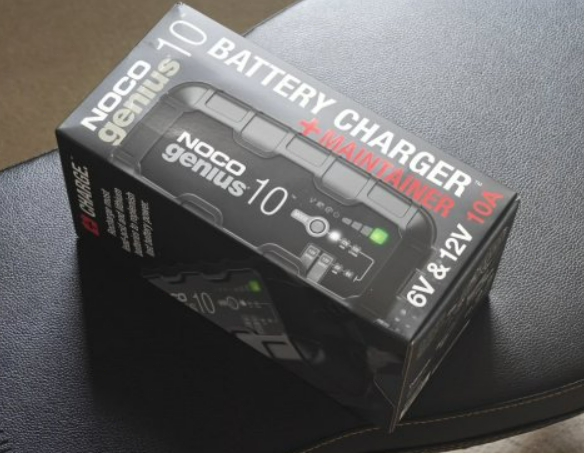
I possess a Sealey cordless tire inflator, a cracking tool, and it includes two batteries and a charger. Additionally, I possess a Noco Boost jump pack, which functions as a torch and includes USB ports for charging devices such as phones.
-
No battery alerts have occurred subsequently. However, I will assist this individual as soon as the weather is not very chilly outside. 😂 I opted for the 10A to avoid an 11-hour charging delay.
-
The battery number on my service sheet is MA001 982 81 08/26, suggesting it is an OEM Varta 80Ah AGM battery; but, it may be from any brand, so I will attempt to inspect it at some point. I believe it will be challenging to make a claim, particularly if it can be sufficiently charged to pass a battery assessment. I can envision them merely recharging it and exclaiming, 'See, it's functioning!' so rendering my trip to NW London, where I no longer reside, futile. There may be a two-year guarantee, potentially less than the manufacturer's, presumably to account for the part number being associated with several vendors.
-
Thank you, everyone. I believed at the time that the auxiliary capacitor was responsible for the start/stop function (I am uncertain about the specific roles of each component, to be honest), and as I was indifferent to that aspect, I neglected it. 😂 I will examine whether there is any warranty on the battery, which was installed during a service at a dealership. I am uncertain if the service sheet will provide relevant information, but I will explore further. I am unaware of the brand, to be honest, as I have never removed the cover. A typical travel exceeding 45 minutes sufficed to mitigate that warning for several weeks, and this remained true even lately. Recent occurrences of the notice appearing post-drive have led me to suspect a phantom drain. However, it currently appears that battery situation is more probable. The current plan is to get a Noco 5 charger, fully recharge it, and assess its status. The battery may have been defective from the outset. An AGM battery, even under less than ideal conditions, should last longer than 2.5 years.
-
Interestingly, it commences seamlessly at 11.7 volts. Yesterday, when I initiated it after a period of inactivity lasting a couple of weeks, it required more cranking; while it did not exhibit difficulty, the process lacked the expected ease.
-
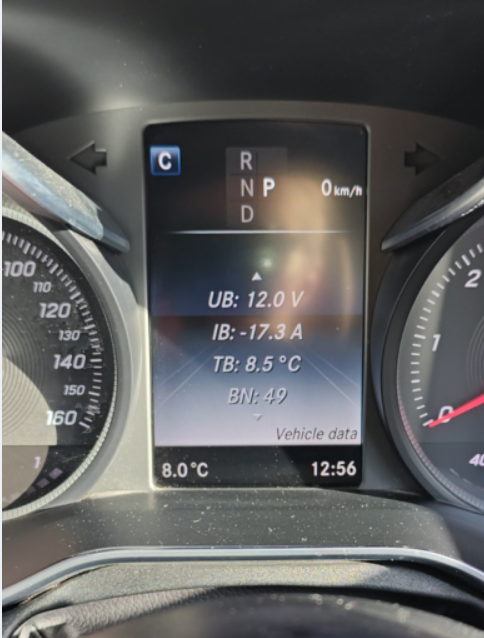
Less than halfway through the drive, the IB decreases from approximately 8 to around 2.x and is rather stable thereafter. BN has scarcely grown, although it typically exhibits a significant gain after charging. Am I correct in assuming that if the alternator is defective due to inadequate charging speed, there would be additional symptoms present? Am I correct in assuming that if the auxiliary battery or capacitor were functioning effectively, there would be a distinct warning and the battery statistics would appear more favourable? Is it unusual or typical for an OEM battery to be depleted after 2.5 years, considering it operates in a suboptimal environment due to occasional use? I no longer believe I am experiencing a phantom drain, as the device does not seem to charge effectively, and warnings reemerge after hours rather than days. What are our thoughts? 😄
-
Greetings, everyone! I require assistance in diagnosing the issue with my battery. I am receiving the persistent yellow battery warning in the vehicle, which occasionally dissipates after a thorough drive but often reappears shortly thereafter. The battery endures a challenging existence, as the car is infrequently driven, resulting in limited time spent in a charged state. I apologise for the information overload; nonetheless, I am providing a timetable and battery statistics. A new primary battery was installed at Mercedes 2.5 years ago, and all is functioning well. A few months later, the start/stop function became dormant once more; nevertheless, everything else was functioning OK, and I was indifferent to the start/stop feature, so we continued as usual. Approximately one year ago, I experienced an event in which I left the vehicle parked on a frigid night with the battery warning illuminated, resulting in a failure to start and necessitating a jump start. Intermittently, particularly in winter when the battery is depleted, the vehicle displays a "collision assist not operational" message, which resolves autonomously after the battery is recharged. A few weeks prior, I drove the car for approximately 40 minutes, and several hours later, I received a battery warning. I took it out once more for an additional 20-30 minute trip, and there were no concerns with an extended interval before the next drive. Yesterday, the battery alert illuminated, prompting me to drive the car for 40 minutes. Several hours later, the battery warning reappeared... Operated the vehicle for an additional 20 minutes, and the warning reappeared later that evening. Operated the vehicle again this morning for 25 minutes and documented the battery statistics, which appeared suboptimal. Battery statistics: Prior to initiating the vehicle (by pressing the start button once to activate the radio and other systems) with a battery warning, I am uncertain whether the -15A reading is typical.
-
Thank you; it indeed appears peculiar. I previously enquired here and was provided with the original part number. If anyone is able to dig up the part number, my VIN is WDD2074032F073442. It appears peculiar that I would acquire an aftermarket component rather than a genuine Mercedes product.
-
My husband is performing maintenance on my automobile for the first time. Having acquired the Mercedes part numbers and procured the components, he is currently engaged in the task. However, the gasoline filter is incompatible, as indicated by the photograph. The Merc component you observe is part number A6510902852, which I have learnt supersedes the earlier part number A6510901652. We were unable to locate that part number for purchasing, therefore we acquired the superseded version. The electrical connection is not identical. I contacted Newcastle Merc on eBay, providing my VIN to acquire one of their service kits, but they have not responded. Therefore, procuring the components independently. Have I accurately acquired the exact part number, or is the superseded information misleading? He has disengaged the clamps and can observe "MAH," concluding that it is an MAHLE unit. The service history indicates that this has not been altered since it was modified by Mercedes in 2014 at 17,000 km. Please assist me.