
All Activity
- Past hour
-
 it has never happened to me before!
 -
 Chatgpt isn't perfect, that's why. Make sure you don't put all your eggs in the basket.
 -
 Every morning before I turn on the ignition, I hear a gurgling sound coming from the tank. I really hope I don't have to deal with this problem, because it seems rather complex. I have been pursuing this for the past three months, and chatgpt has sent me on a diagnostic house tour.
 -
 excellent article. Are you asking which part—the left side seder or the one with the floats—has failed? I'm having the same problem. Tell me how you determined which one was defective.
 -
 To begin, fill the tank to a level of around 20 litres. You must still drain the left side of the saddle to a level of around 20 litres even if all the fuel is in the left saddle. Take off the two covers (found beneath the back seat) using the four bolt head screws on each. Turn the lock rings using the removal tool to unlock them. The top connections (on the left side of the saddle) may likely leak, so you'll need to use clean rags to wipe them up. Undo the fuel pump connectors on the right side of the saddle and tie a string around one of them. (unlock connection with two push clips and one gasoline supply button—yellow) While keeping an eye out for the fuel level float, remove the fuel level sensor assembly from the left hand side. Now secure the ends of the three new pipes with the string. Carefully insert the LHS fuel level sensor assembly into the LHS saddle, wiggle the pipes through the saddle's hole that connects both sides, and last, bring the ends of the pipes into the RHS saddle. Before you connect the pipes to the gasoline pump on the right side of the vehicle, make sure the fuel sensor assembly on the left side is situated appropriately. Prior to installing the lock ring, ensure that the spherical washer is snugly positioned around the plastic housings.(The ring should have a blue mark; line it up with the attachment point's blue mark.) Turn the ring (pushing down on the washer) with the tool until it snaps into position. Be sure to fill the tank halfway. Turn the key to the second position and keep it there until the gasoline pump stops; do this many times. Make sure there are no leaks or tears around the lock rings by running the engine for a while. When the water is clear, fill the tank to the top and check for leaks once more. Put the covers back on after that. (I reinforced the entry locations with more rubber to avoid wire chafing.) Things that go wrong: 1) You can't actually get the gasoline connectors to go to the wrong lugs, but the big one with the yellow button connector at the top of the fuel pump. One with a black rubber ring or gland goes to the one below it, and the one below that gets the one without. 2) If there is any gasoline leaking around the lock ring, remove it, turn the circular washer around by, say, 90 degrees, and then lock it again. 3) As the air is being pumped out of the tank, you may hear gurgling sounds coming from it. Here is my clumsy description of how the saddle tank works: The high-pressure fuel pump and fuel quantity control valve are located on the left side of the engine, and the fuel pump transfers gasoline from there to the engine through the big yellow button connector on the top. No problem. To make sure the petrol pump gets the most fuel possible, empty the left side saddle in preference of the right side. In order to do this, the gasoline is pushed to the left side fuel level sensor assembly via an additional pipe. From there, it flows via a nozzle submerged in fuel at the base of the assembly, which forces fuel into a pipe that recirculates to the right side saddle. It will not be noticeable until the gasoline level drops, at which point the leak will become apparent and air will be able to enter the fuel circulation pipes, therefore a leak in these latter two pipes is actually not a problem. In such case, air is sent to the right-hand tank and the nozzle stops working. In this scenario, there is petrol remaining in the left side saddle, according to your fuel gauge, but there is no fuel in the right side pump.
 -
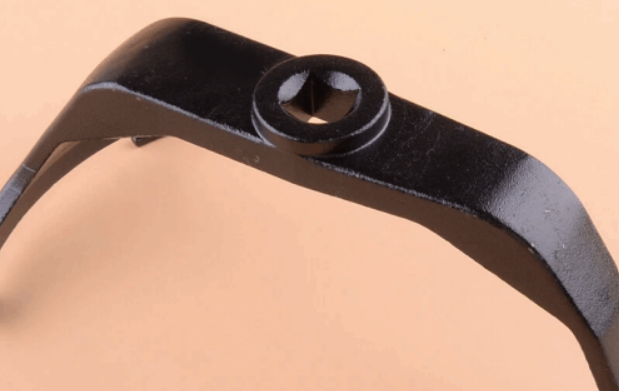
Fits all Mercedes-Benzes equipped with a saddle tank. If you've ever been in the same boat as me and noticed that your gasoline gauge reads just 1/4 full, then this is for you: The gasoline supply lines within the tank have likely grown brittle or broken, allowing air to enter the fuel pipes. It is only necessary to repair the "fuel level sensor" on the left hand side of the saddle tank, not the pump. This set includes all three gasoline pipes that are needed. Make it yourself is possible. Tool for removing gasoline tank lock rings, which has a rather long 1/2" bar:
- Last week
-

between CLS W257 and CLS W219...Update on Brain vs. Heart
guyskin replied to carBlacken's topic in General Discussions
Also, I'm not a fan of LPG, so I'd rule out option 2. The tank is a nuisance, and I don't see the need to add complication. I really doubt that number 1 has a whole MB service history, but it would be a huge plus if it did. If you're going to acquire a vehicle like this, you may as well qualify the owner. -

between CLS W257 and CLS W219...Update on Brain vs. Heart
carBlacken replied to carBlacken's topic in General Discussions
I may attempt to have a look at it this weekend. I appreciate you bringing to my attention the possibility of oil leaks around the valve covers; I will be sure to include that to my list of things to check. "Recently replaced front suspension on the both sides and an airmatic compressor" is what he says in his ad, so I'll be crossing my fingers that it's all in working order with the airmatic suspension. -

between CLS W257 and CLS W219...Update on Brain vs. Heart
Chrishazle replied to carBlacken's topic in General Discussions
The X Type's budget construction was evident in numerous ways. Many suspension parts, among others, will have been changed at 117k miles. -

between CLS W257 and CLS W219...Update on Brain vs. Heart
Alex1978 replied to carBlacken's topic in General Discussions
Before you start the engine, check the car's seating position. Does it lie flat on every side? When you press the airmatic button to raise or lower the automobile, you should see the rear end move in response. On each side of the valve covers, look for signs of oil leaking. Resolving this issue often takes a couple of hours of manual labor on an M113 engine. -
between CLS W257 and CLS W219...Update on Brain vs. Heart
carBlacken replied to carBlacken's topic in General Discussions
I appreciate the speed with which everyone has replied. I'm relieved I trusted my intuition and declined CLS2 since now I'm going to forget all about it. I was once horrified by an X-Type that had 120k miles on the clock. It's ridiculous of me to assume that all vehicles with 100k or more miles have problems, but I can't help but worry about the wear and tear on the rest of the vehicle, not just the engine. Though I can see how a custom exhaust shop might alter the CLS3's exhaust tips to my liking, I still stand by my original opinion. -

between CLS W257 and CLS W219...Update on Brain vs. Heart
spiezen replied to carBlacken's topic in General Discussions
Given the car's impeccable service history, which includes regular gearbox servicing, what's the big deal about 117,000 miles? The engine is big and understressed, and it comes with a good and dependable gearbox. Everything depends on the car's condition. -
between CLS W257 and CLS W219...Update on Brain vs. Heart
Alex1978 replied to carBlacken's topic in General Discussions
If a CLS2 hasn't had maintenance in 40,000 miles, I'd give it a low price, same as before. However, Jay at Mercland is selling it, and his automobiles are of the highest quality. No one has ever complained about his autos. Having 120k on these engines is irrelevant if they have been maintained on time, and CLS3 sounds realistic. No more than two services per year, or 11,000 miles, should be recorded in the service book. In my opinion, £8,000 is a fair price for a 2008 CLS500. It would be nice if the driver's seat was cleaned, and not everyone likes wood paneling. The bright inside is an improvement above the standard black. Make sure the electrical components are functioning properly, and inspect the pad thickness and disc brakes for signs of lipping if you decide to examine it. Feel free to negotiate any amount of wear. Those round quad pipes are an aftermarket exhaust system accessory as well. I also wouldn't disregard CLS1. I am not really concerned about heated seats. Never did my E55 heated seats function. I wasn't missing them. On this one, the price and mileage are more reasonable. -
between CLS W257 and CLS W219...Update on Brain vs. Heart
Chrishazle replied to carBlacken's topic in General Discussions
I would immediately disregard the one that has not been serviced. An automobile I purchased once traveled thirty thousand miles between oil changes. Shortly after, the engine failed. -
I did it! I sold my cherished CLS. The brain triumphed. On the other hand, I would really appreciate it if you Mercedes fans could provide your thoughts on my next CLS. Still have my heart set on a 5.5l W219 CLS; three on auto-trader have piqued my interest, but I'm not sure what to do: wait for the perfect one to come along or cope with the negatives? CLS1 was It has a complete MB service history, fewer miles than average, and seems to be in good shape. I seem to recall reading that this engine had certain issues that were resolved after 2008, but it lacks heated seats and was manufactured before then. Even though I relied on my heated seats frequently in my last vehicle, I'm starting to wonder if I really need them in this one. Again, I could get by with the interior color scheme, even if I'm not a huge lover of it. I can always update the sound system later on, but it doesn't have a suitable upgrade yet. And it's the least expensive one too. An extra advantage is that it is CLS2 LPG converted; the year and mileage are also satisfactory. The salesperson I dealt with when I went to look at this automobile was absolutely firm on the pricing. Since it has been more than 40,000 miles since the last service, I decided not to give it any further attention. I can't help but wonder what else the owner has ignored. CLS3 was For some reason, this one has all the features I could want: flappy paddles, an exhaust system that has already been installed (I'll swap out the exhaust system with whatever one I buy), a respectable sound system, two cup holders (which is a huge deal for me), heated and cooled seats, and a great instrument cluster. But the mileage worries me; for £8,000, I'm not sure I want a car that has practically driven 200,000 miles. I get that I'm upgrading from a brand new CLS to an older model, but the advice in my earlier discussion was helpful, and I want to set aside at least £200 each month to cover maintenance and repairs. Even though a CLS63 would be my dream automobile, I've been psychologically turned off by the thought of the astronomical repair expenses that come with a brand new vehicle costing close to £100,000; I guess I just have to be half practical. what path would you take?
-
Strange, I'm delighted for you that you're satisfied with your automobile.
-
My car is now running like new after I had the brake lines updated. No longer audible, but produces pleasant booing.
-

-
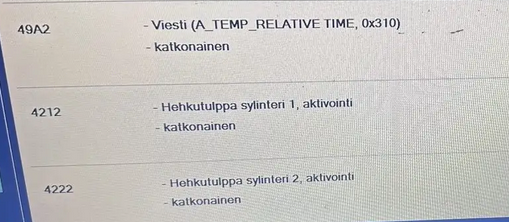
You should begin by doing a fault code scan. In the absence of a code scan, it is only possible that the problem is a broken vacuum pipe.
-
https://www.amazon.co.uk/s?k=auto+parts&linkCod
-
https://www.amazon.co.uk/s?k=auto+parts&linkCode
-
This leads me to my 2006 BMW 530xd e60. My brake lines were severely corroded when I checked yesterday's brake fluid spill. My vehicle is still in my garage. I got in my car today and fired it up; it sounds considerably louder than before, and smoke, mostly blue and white, is coming out of the tailpipe. It seemed like there was absolutely no boost when I drove it for ten minutes to the repair. Being behind the wheel felt like you were in a diesel vehicle devoid of turbo. Even if the RPM reaches 4000, it appears that no boost is applied. On level roads, whether I use cruise control or keep the speed constant, I see that the rpm fluctuates somewhat.
-
Not the same vehicle, but switches under the shifter have given me trouble in the past. Do it again after removing and cleaning with a high-quality contact cleaner. After much cleaning, I decided to replace a switch because it was just twelve euros and the cleanup was effective.
-
It might be a defective switch, I hope. Nothing that I can think of has ever been spilt on it. As far as I can tell, it isn't creating any issues right now, and I seldom use Sport. I will inform the dealer about the booking for the yearly service since, as said before, I saw the problem before it happened. Warm regards